
Essential Compliance Features for 2026 AI Talent Matching Solutions
By 2026, the regulatory landscape governing artificial intelligence in human resources has shifted from advisory guidelines to strict enforcement. Organizations relying on automated candidate screening face unprecedented scrutiny regarding data privacy, algorithmic bias, and transparency. Recent industry analyses indicate that companies failing to implement robust compliance frameworks in their recruiting tech stacks face significant legal liabilities and reputational damage. According to recent workforce technology reports, over 60% of enterprise HR departments have already revised their vendor selection criteria to prioritize auditability and ethical AI deployment. This shift is not merely a best practice but a fundamental requirement for operational continuity in the modern talent acquisition ecosystem.
Understanding the 2026 Regulatory Landscape
The year 2026 marks a critical inflection point for AI governance in recruitment. Governments across North America, Europe, and Asia have moved past the initial phases of AI regulation, establishing concrete standards for automated decision-making systems. The European Union's AI Act, which began its phased implementation in previous years, now fully governs high-risk AI applications, including those used for hiring and promotion. Similarly, regulatory bodies in the United States have intensified their focus on algorithmic accountability, particularly in jurisdictions with strict employment laws.
For talent acquisition leaders, this means that the "black box" approach to AI recruiting is no longer viable. Candidates and regulators alike demand visibility into how decisions are made. Industry insights suggest that transparency is becoming the primary differentiator between compliant and non-compliant recruiting platforms. Organizations must ensure that their AI tools do not just produce results but can explain the rationale behind those results in a legally defensible manner.
Furthermore, the concept of algorithmic accountability is now embedded in corporate governance structures. Boards of directors are increasingly held responsible for the ethical deployment of AI technologies. This top-down pressure ensures that compliance is not an afterthought but a foundational element of technology procurement. Companies that ignore these trends risk not only legal penalties but also a loss of trust among top-tier talent who prioritize ethical employers.
Core Compliance Features for AI Recruiters
To navigate this complex environment, AI talent matching solutions must incorporate specific technical features designed to ensure regulatory adherence. These features go beyond basic data encryption and delve into the logic and processing of candidate information.
1. Explainable AI (XAI) Capabilities
Explainable AI refers to methods and techniques in the field of artificial intelligence such that the results of the solution can be understood by human experts. In the context of recruiting, XAI allows HR professionals to see exactly which factors contributed to a candidate's ranking. For example, if a candidate is ranked highly, the system should be able to highlight specific skills, experiences, or certifications that drove that score. This transparency is crucial for defending against discrimination claims and ensuring that hiring decisions are based on job-relevant criteria.
2. Automated Audit Trails
An audit trail is a secure, time-stamped record of all actions taken within a system. For AI recruiting platforms, this means logging every interaction, data modification, and algorithmic decision. These logs must be immutable and easily retrievable for regulatory inspections. When a candidate disputes a hiring decision, the ability to reconstruct the exact state of the algorithm at that moment is vital. Platform features that support granular logging provide the necessary evidence to demonstrate compliance with fair hiring practices.
3. Real-Time Bias Detection
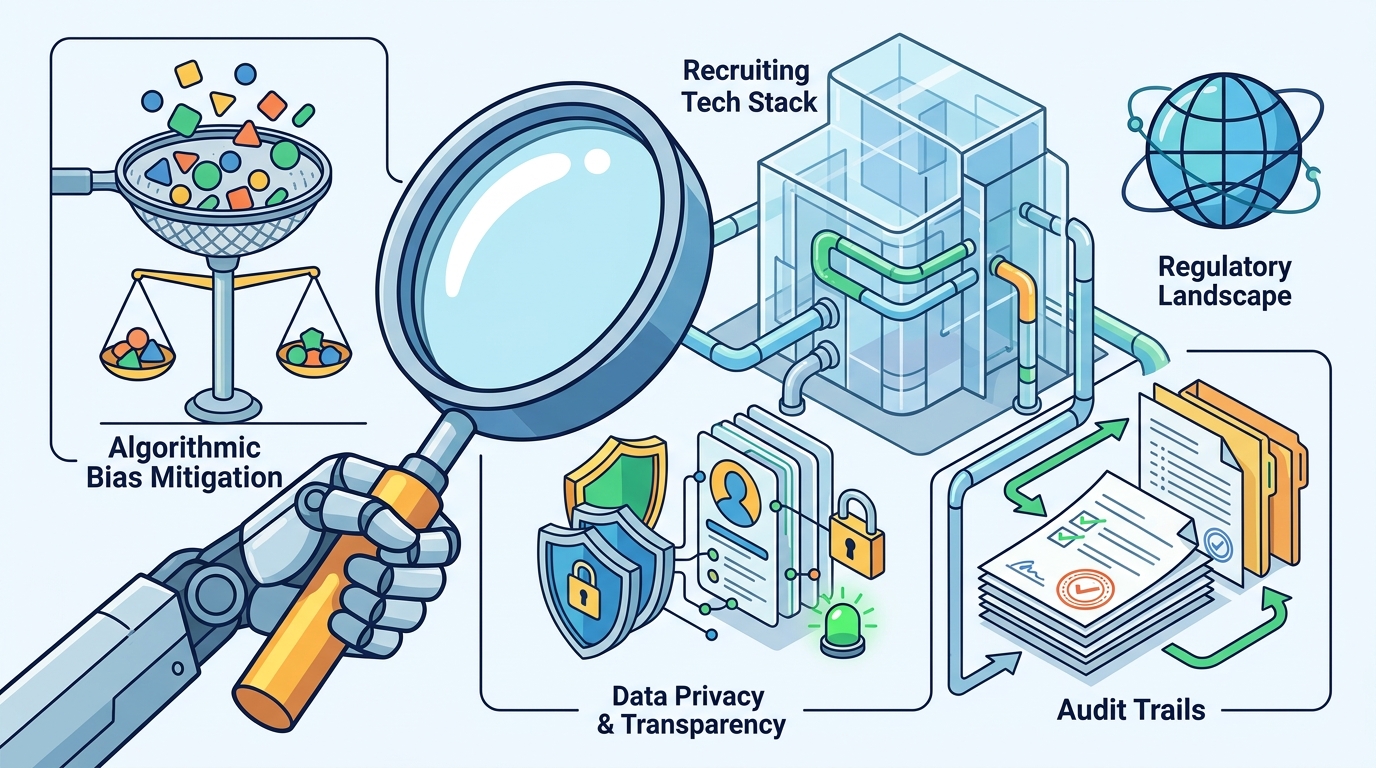
Traditional bias audits are often conducted annually, which is insufficient for dynamic AI models that learn and adapt in real-time. Modern solutions must include continuous monitoring tools that flag potential bias as it emerges. This involves checking for disparities in selection rates across protected groups such as gender, race, and age. If the system detects a drift in bias, it should trigger alerts or automatically adjust parameters to mitigate the issue. This proactive approach aligns with the assessment methodologies required to maintain ethical standards.
Bias Mitigation Strategies
Bias in AI is not just a technical glitch; it is a systemic risk that can lead to severe legal consequences. Mitigating bias requires a multi-layered strategy that addresses data, algorithms, and human oversight.
Data Hygiene and Representation
The quality of AI output is directly dependent on the quality of its training data. If historical hiring data contains biases, the AI will likely replicate and even amplify them. Compliance requires rigorous data hygiene processes, including the removal of proxy variables that correlate with protected characteristics. For instance, zip codes can often serve as proxies for race or socioeconomic status. Advanced AI solutions must identify and neutralize these proxies during the data preprocessing stage.
Human-in-the-Loop (HITL) Workflows
While AI can process vast amounts of data, it lacks the contextual understanding and ethical judgment of human recruiters. A compliant system must enforce human-in-the-loop workflows where critical decisions, such as final hiring choices, are reviewed by humans. This does not mean the AI is removed from the process but rather that its recommendations are validated. This hybrid approach ensures that automated efficiency does not come at the cost of ethical oversight.
Regular Algorithmic Audits
Even with real-time monitoring, periodic deep-dive audits are necessary. These audits should be conducted by independent third parties to ensure objectivity. The findings should inform continuous model refinement. According to recent workforce technology reports, organizations that conduct regular third-party audits report higher levels of confidence in their AI systems and lower rates of compliance violations.
Data Privacy and Security Protocols
Recruiting AI systems handle sensitive personal data, making privacy a paramount concern. Regulations such as GDPR in Europe and various state-level laws in the US impose strict requirements on data handling.
Data Minimization
Data minimization is the principle that organizations should only collect and process the personal data that is strictly necessary for the specified purpose. AI recruiting tools must be designed to collect only job-relevant information. Collecting extraneous data increases the risk of privacy breaches and regulatory non-compliance. Candidates should have clear visibility into what data is collected and how it is used.
Consent Management
Explicit consent is required before processing candidate data for AI-driven analysis. This consent must be informed, specific, and freely given. Platforms must provide easy-to-use mechanisms for candidates to grant, withdraw, or modify their consent. Failure to obtain proper consent can result in significant fines and legal action. Frequently asked questions on compliance often highlight the importance of clear consent workflows.
Encryption and Access Control
Data must be encrypted both in transit and at rest. Access to candidate data should be restricted to authorized personnel only, based on the principle of least privilege. Multi-factor authentication and role-based access controls are essential components of a secure recruiting infrastructure. These measures protect against unauthorized access and data breaches.
Vendor Evaluation Checklist
When selecting an AI talent matching solution, HR leaders must evaluate vendors based on their compliance capabilities. The following table summarizes key evaluation criteria.
| Compliance Feature | Description | Why It Matters |
|---|---|---|
| Explainable AI (XAI) | Ability to provide clear reasons for candidate rankings. | Ensures transparency and defends against discrimination claims. |
| Audit Trails | Immutable logs of all system actions and decisions. | Provides evidence for regulatory inspections and internal reviews. |
| Bias Monitoring | Real-time detection of disparities in hiring outcomes. | Prevents systemic bias and ensures fair hiring practices. |
| Data Minimization | Collection of only necessary candidate data. | Reduces privacy risks and aligns with GDPR/CCPA requirements. |
| Consent Management | Tools for managing candidate data permissions. | Ensures legal basis for data processing and builds trust. |
Evaluating vendors against these criteria ensures that the chosen solution aligns with your organization's compliance goals. Let us help upgrade your recruiting strategy by providing a platform that meets these rigorous standards.
Key Takeaways
- Regulatory enforcement for AI in HR is strict and increasing globally, with 2026 marking a peak in compliance requirements.
- Explainable AI (XAI) is no longer optional; it is a fundamental requirement for defending hiring decisions.
- Real-time bias detection is essential for maintaining ethical standards in dynamic AI models.
- Data minimization and explicit consent are critical components of privacy compliance.
- Human-in-the-loop workflows ensure that ethical judgment remains central to the hiring process.
- Regular third-party audits provide objective validation of AI system fairness.
- Choosing a compliant vendor reduces legal risk and enhances employer brand reputation.
Frequently Asked Questions
What is the primary compliance risk of using AI in recruiting?
The primary risk is algorithmic bias, which can lead to discriminatory hiring practices and subsequent legal action. Additionally, data privacy violations pose a significant threat.
How does Explainable AI (XAI) help with compliance?
Explainable AI provides clear, understandable reasons for candidate rankings, allowing HR teams to verify that decisions are based on job-relevant criteria rather than biased factors.
Is real-time bias monitoring necessary?
Yes, because AI models can drift over time. Real-time monitoring ensures that bias is detected and corrected immediately, rather than after significant harm has occurred.
What data minimization means in recruiting?
Data minimization means collecting only the personal information strictly necessary for the hiring process, reducing the risk of privacy breaches and regulatory non-compliance.
How often should AI recruiting systems be audited?
While real-time monitoring is essential, comprehensive third-party audits should be conducted at least annually to ensure ongoing compliance and fairness.
Can AI recruiting tools handle GDPR requirements?
Yes, compliant AI tools are designed to support GDPR requirements, including data minimization, consent management, and the right to explanation.
What is the role of human oversight in AI recruiting?
Human oversight ensures that ethical judgment and contextual understanding are applied to AI recommendations, preventing purely automated decisions that may lack nuance.
Next Steps for Your Organization
As the regulatory landscape continues to evolve, staying ahead of compliance requirements is essential for sustainable growth. Organizations that prioritize ethical AI and robust compliance frameworks will not only avoid legal pitfalls but also build stronger trust with candidates and stakeholders. To ensure your recruiting strategy is aligned with these demands, explore our comprehensive solutions designed for modern compliance needs. Contact us today to schedule a demo and discover how Match2 can help you navigate the complexities of AI talent matching with confidence and integrity.