
Universal Job Profiles: The 2026 Guide to Cross-Site Candidate Data
Yes, a universal job profile is a persistent digital identity that allows candidates to maintain a single set of skills, resume data, and preferences across multiple employer career sites. This guide explains how universal profiles function, the limitations of current integrations, and how platforms like Match2 modernize this workflow. We cover the technical architecture, integration strategies, and the impact on candidate experience. For additional details, review the Match2Jobs Workforce Solutions.
Universal Candidate Profiles
Traditional recruiting relies on siloed data. When a candidate applies to a company, their data is trapped in that specific Applicant Tracking System (ATS). A universal candidate profile is a centralized repository of professional data that travels with the user across different employer domains. This concept shifts the power dynamic from the employer holding the data to the candidate controlling their digital identity. For additional details, review the Match2Jobs Workforce Solutions.
The Architecture of a Universal Profile
Building a universal profile requires a robust backend that can normalize data from various sources. The profile must store core elements such as work history, education, skills, and certifications. It also needs to handle dynamic data like availability and location. The technical challenge lies in ensuring that this data is structured in a way that different ATSs can ingest without manual re-entry.
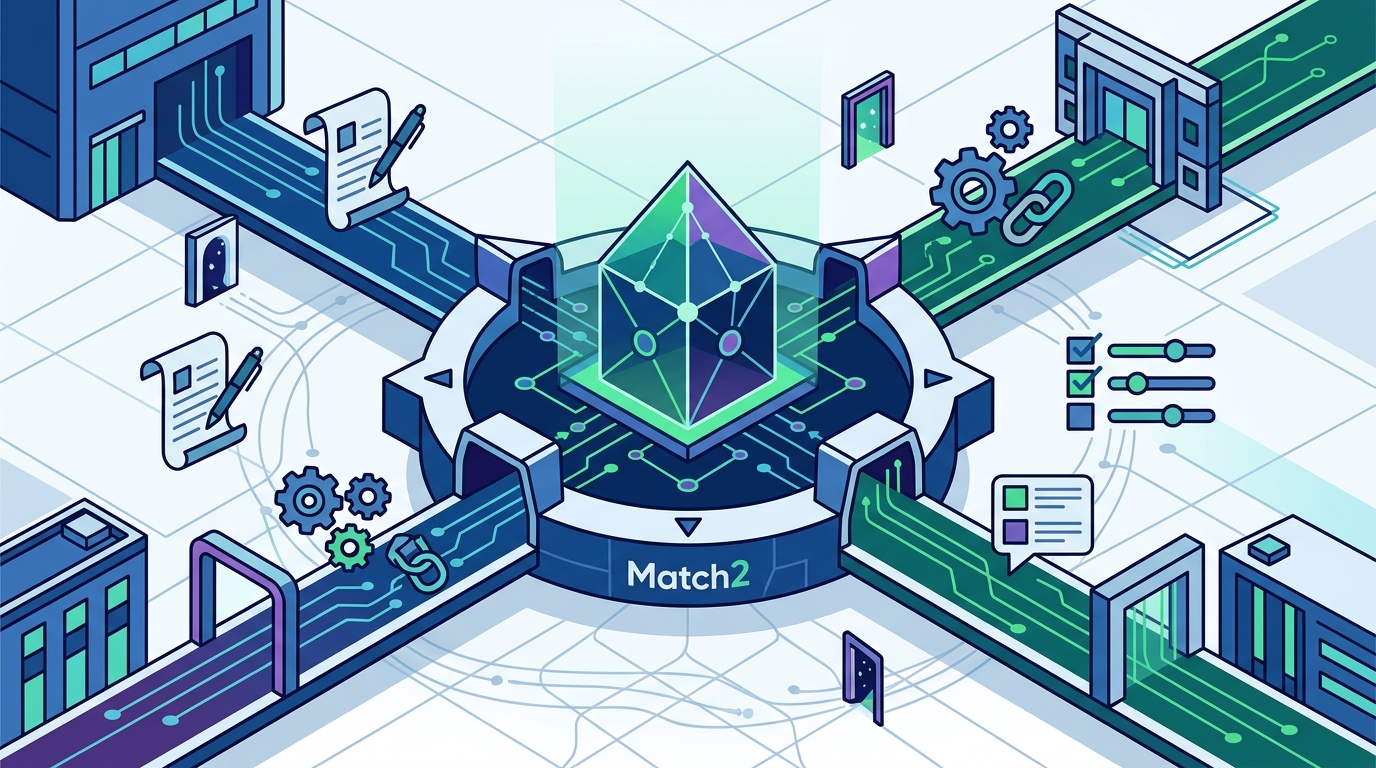
Match2 addresses this by providing a universal profile and portal that travels with candidates across career sites. This simplifies account management and allows for optimized applications. The platform uses a Talent Connector script to recognize candidate users and power instant matching. This script acts as a bridge between the candidate's universal data and the employer's hiring applications.
Benefits for Candidates and Employers
For candidates, a universal profile reduces the friction of job searching. They do not need to upload the same resume or re-enter the same skills for every application. This leads to a better candidate experience and higher application completion rates. For employers, it provides access to richer, more up-to-date data. Instead of a static PDF resume, recruiters can see real-time updates on a candidate's skills and status.
The social network effect is a critical component of this model. By connecting candidates to a private direct talent network, employers can engage with passive talent. This network allows for bi-directional updates, meaning candidates can receive alerts about new roles that match their profile. This transforms the career site from a static job board into an interactive talent hub.
LinkedIn and Indeed Integrations
Many employers rely on job boards like LinkedIn and Indeed to source candidates. However, these platforms operate as intermediaries. They hold the candidate data and control the flow of applications. A universal profile that integrates with these platforms can streamline the process, but it requires careful handling of data ownership and privacy.
The Role of Job Boards in the Ecosystem
Job boards are essential for reach. They allow employers to post jobs to a massive audience. However, the data flow is often one-way. The candidate applies through the job board, and the data is sent to the employer's ATS. The candidate's profile on the job board remains separate from their profile on the employer's career site. This fragmentation can lead to data inconsistencies and a disjointed user experience.
Integrations with these platforms can help bridge the gap. By allowing candidates to use their existing job board profiles to pre-fill applications, employers can reduce drop-off rates. This is where the concept of a universal profile becomes even more valuable. It acts as a layer above the job boards, ensuring that the candidate's data is consistent regardless of where they apply.
Privacy and Data Control
Privacy is a major concern when integrating with third-party platforms. Candidates must have control over what data is shared and with whom. A universal profile should give candidates the ability to opt in or out of sharing specific data points. This transparency builds trust and encourages candidates to use the platform. Match2 is compliant with privacy laws and provides candidates with data control features. This ensures that the universal profile respects user autonomy while still providing value to employers.
Key Takeaways
- A universal job profile is a persistent digital identity that allows candidates to maintain a single set of data across multiple career sites.
- Traditional ATSs create data silos, trapping candidate information within a single employer's system.
- Platforms like Match2 use a Talent Connector script to bridge the gap between universal profiles and employer ATSs.
- Universal profiles improve the candidate experience by reducing the friction of re-entering data for every application.
- Employers benefit from access to real-time, up-to-date candidate data, including skills and availability.
- Integrations with job boards like LinkedIn and Indeed can streamline sourcing but require careful handling of data ownership.
- Privacy and data control are critical components of a successful universal profile implementation.
- The social network effect of a universal profile allows employers to engage with passive talent in a private direct network.
Frequently Asked Questions
What is a universal job profile?
A universal job profile is a centralized digital identity that stores a candidate's professional data, such as resume, skills, and preferences, allowing it to be used across multiple employer career sites.
How does a universal profile work with an ATS?
A universal profile works with an ATS through integration scripts or APIs that map the candidate's data to the fields required by the ATS. This allows for pre-filled applications and real-time data updates.
Can candidates control their data in a universal profile?
Yes, candidates should have full control over their data in a universal profile. This includes the ability to edit, delete, and choose which data points to share with specific employers.
What is the difference between a universal profile and a job board profile?
A job board profile is specific to one platform, such as LinkedIn or Indeed. A universal profile is designed to travel across multiple platforms and employer career sites, providing a consistent experience for the candidate.
How does Match2 support universal profiles?
Match2 provides a universal profile and portal that travels with candidates across career sites. It uses a Talent Connector script to recognize candidates and power instant matching and connectivity to hiring applications.
Are universal profiles compliant with privacy laws?
Yes, a well-designed universal profile should be compliant with privacy laws. This includes providing candidates with transparency about data usage and the ability to control their data. Match2 is compliant with privacy laws and provides data control features.
Conclusion
The shift toward universal job profiles is transforming the recruiting landscape. By giving candidates control over their digital identity, employers can access richer data and improve the candidate experience. Platforms like Match2 are leading this charge by providing the infrastructure for universal profiles and direct talent networks. To learn more about how Match2 can modernize your career site and recruiting workflow, visit Match2.