
Universal Job Profiles: The 2026 Guide to Cross-Site Candidate Matching
Yes, a universal job profile is a single, persistent digital identity that allows candidates to maintain one set of skills, resume data, and preferences across multiple employer career sites. This eliminates the repetitive friction of re-entering data for every application. This guide explores how universal profiles solve the fragmentation of modern hiring, the technical architecture required to support them, and how platforms like Match2 implement this standard to improve both candidate experience and employer efficiency.
Universal Candidate Profiles
A universal candidate profile is a centralized repository of professional data that travels with the job seeker rather than being siloed within individual company systems. Traditional recruiting models force candidates to recreate their identity for every new application. They must re-upload resumes, re-enter work history, and re-specify skills for each distinct career site. This process is not only tedious but also leads to data inconsistency. When a candidate updates their skills in one system, that update rarely propagates to others. A universal profile solves this by acting as a single source of truth for the candidate's professional identity.
The Mechanics of a Universal Profile
The core function of a universal profile is persistence. It stores core data points such as contact information, employment history, education, and verified skills. When a candidate visits a new employer's career site, the platform recognizes their existing profile. Instead of presenting a blank form, it pre-fills the application with their stored data. This reduces the time to apply from minutes to seconds. The profile also allows for granular control over what is shared. Candidates can choose to hide specific jobs or limit the visibility of their current employment status.
Standardization of Data
For a profile to be truly universal, the data must be structured in a way that different systems can interpret. This requires standardizing how skills, job titles, and qualifications are recorded. Without standardization, a skill listed as "Python" in one system might not match "Python Programming" in another. Universal profiles use normalized taxonomies to ensure that data remains meaningful across different Applicant Tracking Systems (ATS). This standardization is critical for automated matching algorithms to function correctly across the entire ecosystem.
ATS Platform Fragmentation
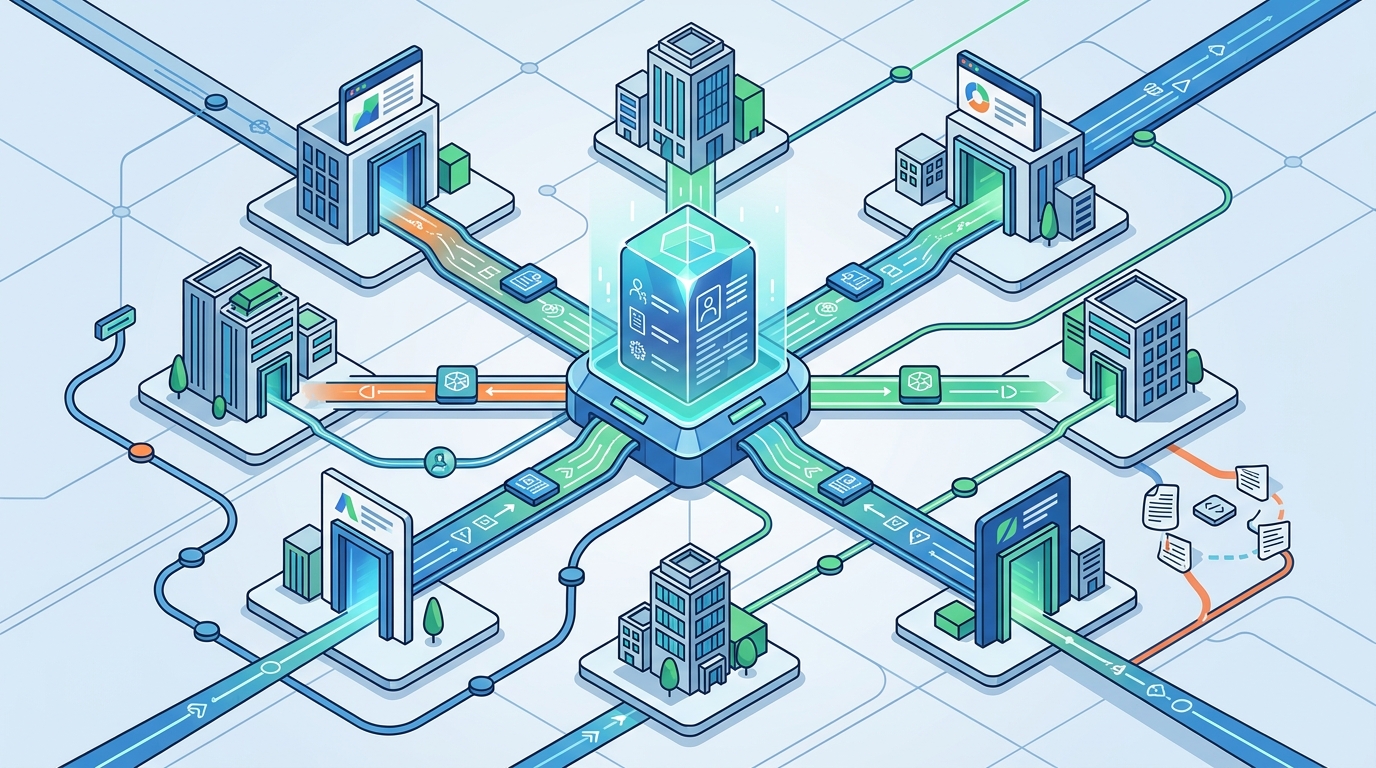
Applicant Tracking System fragmentation is the state where hiring data is isolated within proprietary, non-communicating software platforms used by different employers. In the current market, there is no single dominant ATS that every company uses. Employers utilize a wide variety of systems, each with its own data structure, API capabilities, and user interface. This creates a fragmented landscape where candidate data is trapped in silos. A candidate who applies to Company A has their data stored in one system, while their application to Company B is stored in a completely different one. There is no bridge between these systems.
The Cost of Siloed Data
Fragmentation creates significant friction for both candidates and employers. For candidates, it means a lack of continuity. They cannot see a unified view of their application status across different companies. For employers, it means a lack of visibility into the broader talent pool. They can only see candidates who have explicitly applied to their specific jobs. They cannot easily access passive candidates who are active in other parts of the ecosystem. This siloing prevents the formation of a true talent network. It limits the ability to build long-term relationships with candidates who may not be a fit today but could be in the future.
The Need for Interoperability
To overcome fragmentation, the industry needs interoperability. This is the ability of different systems to exchange data and use that data in a meaningful way. Universal profiles act as the layer of interoperability. They sit above the fragmented ATS landscape and provide a consistent interface for candidates. When an employer integrates with a universal profile platform, they gain access to a standardized stream of candidate data. This allows them to bypass the limitations of their specific ATS and connect with a broader, more dynamic talent pool. The goal is to create a connected ecosystem where data flows freely and securely between candidates and employers.
Technical Architecture and Integration
Implementing a universal profile requires a robust technical architecture that can handle real-time data synchronization and secure authentication. The core component is a lightweight script or SDK that employers embed into their career sites. This script detects when a user with a universal profile visits the site. It then authenticates the user and retrieves their profile data from the central platform. This process happens in the background, ensuring a seamless experience for the candidate. The data is then mapped to the fields required by the employer's specific ATS.
Real-Time Data Synchronization
One of the key technical challenges is keeping the data current. A universal profile must reflect the candidate's latest resume, skills, and availability in real-time. This requires a bidirectional communication channel. When a candidate updates their profile, the change is immediately propagated to any employer systems that have an active connection. Conversely, if an employer updates a candidate's application status, that status is reflected in the candidate's universal dashboard. This real-time synchronization ensures that both parties are always working with the most accurate information. It eliminates the lag that is common in traditional email-based recruiting workflows.
Security and Privacy
Candidate Experience and Data Control
Candidate experience is the sum of all interactions a job seeker has with an employer's hiring process. In the context of universal profiles, the focus is on reducing friction and increasing agency. Traditional applications are often long, repetitive, and opaque. Candidates rarely know what happens to their data after they submit it. A universal profile shifts the power dynamic. It gives candidates control over their data and their application process. They can see exactly where they stand with each employer. They can update their information once and have it apply everywhere. This level of control is a significant improvement over the traditional model.
Reducing Application Fatigue
Application fatigue is a real phenomenon that discourages many qualified candidates from applying for jobs. The time and effort required to tailor a resume and fill out a form for each application is a barrier. Universal profiles eliminate this barrier. By pre-filling applications, they reduce the cognitive load on the candidate. This allows candidates to focus on the aspects of the job that matter most to them, such as the role itself and the company culture. It also increases the volume of applications that candidates are willing to submit. This benefits employers by giving them access to a larger pool of qualified candidates.
Transparency and Feedback
Another key aspect of candidate experience is transparency. Candidates want to know the status of their applications. They want to know if their resume was viewed, if they were shortlisted, or if they were rejected. Universal profiles can provide this visibility. They can aggregate status updates from multiple employers into a single dashboard. This gives candidates a clear picture of their job search progress. It also allows for more meaningful feedback. Employers can send updates directly to the candidate's universal profile, ensuring that the message is seen and tracked. This level of transparency helps build a positive relationship between the candidate and the employer, even if the candidate is not hired.
Employer Benefits and Talent Networks
For employers, the primary benefit of universal profiles is access to a direct talent network. This is a pool of candidates who have opted in to be contacted by employers. Unlike traditional job boards, which are transactional, a direct talent network is relational. It allows employers to build long-term connections with candidates. They can engage with passive candidates who are not actively looking for a job but may be open to the right opportunity. This access to passive talent is a significant competitive advantage. It allows employers to fill roles faster and with higher quality candidates.
Building a Direct Talent Network
A direct talent network is built on the foundation of the universal profile. When a candidate creates a profile, they are essentially joining a network. Employers can then search this network based on skills, experience, and location. They can reach out to candidates directly, bypassing the need for a job posting. This is particularly useful for niche roles or hard-to-fill positions. It also allows employers to nurture relationships with candidates over time. They can send updates about the company, share articles, or invite candidates to events. This ongoing engagement keeps the employer top of mind for the candidate.
Improving Hiring Efficiency
Universal profiles also improve hiring efficiency by streamlining the screening process. Because the data is standardized and verified, employers can trust the information they receive. They can use automated matching algorithms to identify the best candidates from the network. This reduces the time spent on manual screening. It also improves the quality of the candidate pool. By focusing on candidates who have a strong match with the role, employers can move faster through the interview process. This leads to shorter time-to-hire and lower cost-per-hire. It also improves the candidate experience, as candidates are more likely to be contacted for roles that are a good fit for them.
Key Takeaways
- A universal candidate profile is a single, persistent digital identity that allows candidates to maintain one set of data across multiple employer career sites.
- ATS platform fragmentation is a major barrier to efficient hiring, as it isolates candidate data within proprietary, non-communicating systems.
- Universal profiles act as a layer of interoperability, bridging the gap between fragmented ATS platforms and providing a consistent interface for candidates.
- Real-time data synchronization is essential for universal profiles to remain accurate and useful for both candidates and employers.
- Security and privacy are critical components of universal profile platforms, requiring strict data protection standards and granular consent management.
- Universal profiles reduce application fatigue for candidates by pre-filling applications and providing transparency into application status.
- For employers, universal profiles provide access to a direct talent network, allowing them to engage with passive candidates and build long-term relationships.
- Implementing universal profiles can lead to improved hiring efficiency, shorter time-to-hire, and lower cost-per-hire for employers.
Frequently Asked Questions
What is a universal job profile?
A universal job profile is a centralized repository of professional data that travels with the job seeker. It allows candidates to maintain one set of skills, resume data, and preferences across multiple employer career sites.
How do universal profiles work with different ATS platforms?
Universal profiles use a standardized data format that can be mapped to the fields required by different ATS platforms. A lightweight script embedded in the employer's career site detects the candidate's profile and retrieves their data, which is then pre-filled into the application form.
Are universal profiles secure?
Yes, reputable universal profile platforms adhere to strict data protection standards. This includes encryption of data in transit and at rest, as well as granular consent management that gives candidates control over what data is shared.
Do candidates have control over their data?
Yes, candidates have full control over their data. They can choose what information to include in their profile, who can see it, and how it is used. They can also update their data at any time, and the changes are propagated in real-time.
How do universal profiles benefit employers?
Universal profiles benefit employers by providing access to a direct talent network. This allows them to engage with passive candidates, build long-term relationships, and improve hiring efficiency by streamlining the screening process.
Can universal profiles help with passive recruiting?
Yes, universal profiles are particularly useful for passive recruiting. They allow employers to search a network of candidates who are not actively looking for a job but may be open to the right opportunity. This gives employers access to a broader pool of talent.
Conclusion
The question of whether a universal job profile works across multiple company career sites is answered by the growing adoption of platforms designed to bridge the gap between fragmented ATS systems and candidate needs. A universal profile is not just a convenience; it is a fundamental shift in how talent is connected. It empowers candidates with control over their data and reduces the friction of applying for jobs. For employers, it provides access to a direct talent network that enhances passive recruiting and improves hiring efficiency. As the industry moves toward more connected and candidate-centric models, universal profiles will become the standard for modern recruiting. Organizations looking to modernize their career sites and build a robust talent network should consider implementing a universal profile solution. Match2 offers a comprehensive platform that enables this connectivity, helping employers and candidates thrive in the new era of work.