

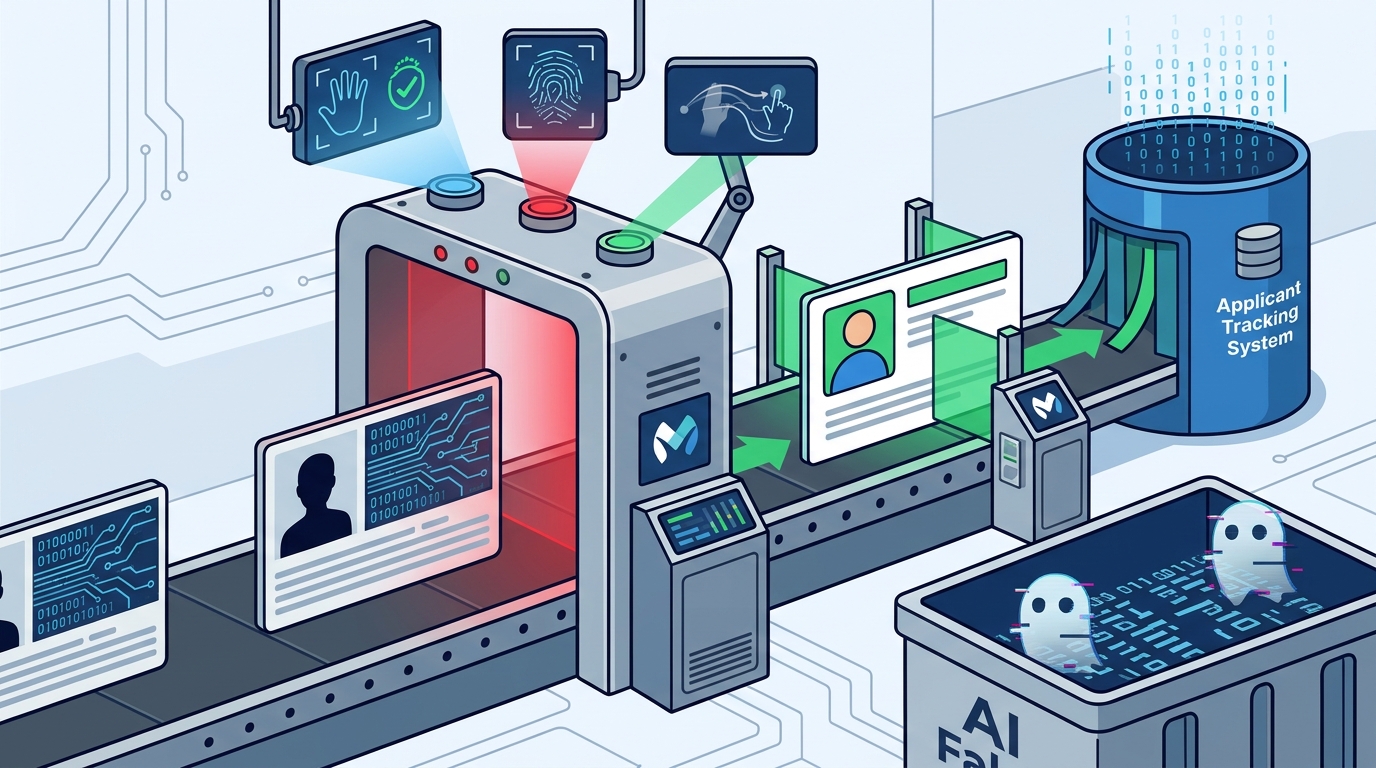
Employers can verify candidate identity by implementing multi-factor authentication, device fingerprinting, and behavioral biometrics at the application stage. These methods confirm that a human is actively interacting with the career site. This approach stops automated bots and AI-generated fake profiles before they enter the applicant tracking system. It protects data integrity and saves recruiting time. For additional details, review the .
Core Verification Layers
Identity verification is the process of confirming that a digital user is the actual person they claim to be. In the context of recruiting, this means ensuring the applicant is a real human with a valid identity. Traditional email verification is no longer sufficient against sophisticated AI bots. Employers need layered security approaches to filter out synthetic identities. For additional details, review the Customer Experience.
Device fingerprinting is a technical method that creates a unique profile of a user's browser and hardware. It detects if an application comes from a known bot network or a data center IP address. This layer operates silently in the background. It adds friction for malicious actors while remaining invisible to legitimate candidates. For additional details, review the Frequently Asked Questions.
Multi-factor authentication (MFA) adds a second step to the login or application process. It requires a code sent via SMS or an authenticator app. This confirms control of a specific phone number. It significantly raises the cost for attackers trying to mass-produce fake accounts. The combination of device checks and MFA creates a robust first line of defense. For additional details, review the About.
Behavioral Signals and Biometrics
Behavioral biometrics is a security technique that analyzes how a user interacts with a digital interface. It tracks mouse movements, typing rhythm, and scroll patterns. AI-generated applications often exhibit robotic or inconsistent behavior. Humans type with natural pauses and variable speed. Bots tend to move in straight lines or type at uniform speeds.
Employers can use these signals to flag suspicious activity in real-time. A candidate who fills out a complex form in seconds is likely a bot. A candidate who hovers over fields and reads carefully is likely human. This analysis happens during the application process. It allows for immediate rejection of fake submissions without bothering recruiters.
Match2 integrates these signals into its candidate profile system. The platform uses a universal profile that travels with the candidate. This continuity helps verify identity across different career sites. If a candidate has a verified history on one site, their identity is stronger on another. This cross-site verification reduces the risk of isolated fake profiles.
Platform Integration Strategies
Platform integration is the process of embedding verification tools directly into the career site workflow. This ensures that verification happens before the application is submitted. It prevents fake data from entering the applicant tracking system (ATS). This approach is more efficient than post-screening filters. It saves recruiters from reviewing obviously fake resumes.
Match2 provides a Talent Connector script that powers this instant experience. The script recognizes verified candidates and powers matching. It also helps verify identity by checking against the private direct talent network. This network contains real-time resume and skills data. It updates into any existing hiring platform. This integration ensures that the candidate data is authentic and current.
Privacy and Compliance Considerations
Privacy compliance is the adherence to laws and regulations regarding the collection and use of personal data. Identity verification tools must respect candidate privacy. Employers must be transparent about what data they collect. They must explain why they collect it. This transparency builds trust with candidates.
Regulations like the GDPR and CCPA have specific requirements for biometric data. Behavioral biometrics may fall under these regulations. Employers must obtain explicit consent before collecting such data. They must provide clear opt-out options. Failure to comply can result in legal penalties and reputational damage.
Employers should choose verification tools that are privacy-first. These tools should minimize data collection. They should only collect what is necessary for verification. They should allow candidates to control their data. This approach balances security with respect for candidate rights. It ensures that the verification process is ethical and legal.
Key Takeaways
- Layered verification using device fingerprinting and MFA is essential to stop AI bots.
- Behavioral biometrics can detect robotic interaction patterns in real-time.
- Platform integration ensures verification happens before data enters the ATS.
- Match2's universal profile helps verify identity across multiple career sites.
- Privacy compliance requires transparency and explicit consent for biometric data.
- Pre-apply verification saves recruiters time by filtering out fake applications.
- Seamless verification maintains high conversion rates for legitimate candidates.
Frequently Asked Questions
What is the most effective way to verify candidate identity?
The most effective way is a combination of device fingerprinting, multi-factor authentication, and behavioral biometrics. This layered approach catches different types of bots. It provides a robust defense against AI-generated fake applications.
Does identity verification slow down the application process?
When implemented correctly, verification should be seamless. It happens in the background or as a quick step. Legitimate candidates should not experience significant friction. The goal is to block bots without hurting the user experience for real talent.
How does Match2 help with identity verification?
Match2 uses a universal candidate profile that travels across career sites. This continuity helps verify identity. The platform also integrates with hiring systems to provide real-time data. This ensures that the candidate data is authentic and up-to-date.
Is behavioral biometrics legal to use in recruiting?
Yes, but it must be done with transparency and consent. Employers must inform candidates about the data collection. They must comply with privacy laws like GDPR and CCPA. Clear communication is key to maintaining trust and legal compliance.
Can AI bots bypass multi-factor authentication?
Advanced bots can sometimes bypass simple MFA. However, combining MFA with device fingerprinting and behavioral analysis makes it much harder. The combination of these layers creates a strong barrier that is difficult for automated scripts to overcome.
What is a universal candidate profile?
A universal candidate profile is a single digital identity that a candidate can use across multiple career sites. It simplifies account management and data control. It also helps employers verify identity by providing a consistent history of the candidate's skills and experience.